
In the Spring of 2019, I took a business school class on blockchain and cryptocurrency. The class left me more confused than anything, but it prompted me to start reading about the topic. Over the last year, I’ve gone down the proverbial rabbit hole as people in the space are fond of saying. For me, podcasts have been the best gateway into the world of blockchain. My two favorites have been Castle Island’s On the Brink and The Pomp Podcast. At first, 80% to 90% of the content went over my head, but that percentage has steadily come down as I continue listening and build an understanding of the industry’s vocabulary.
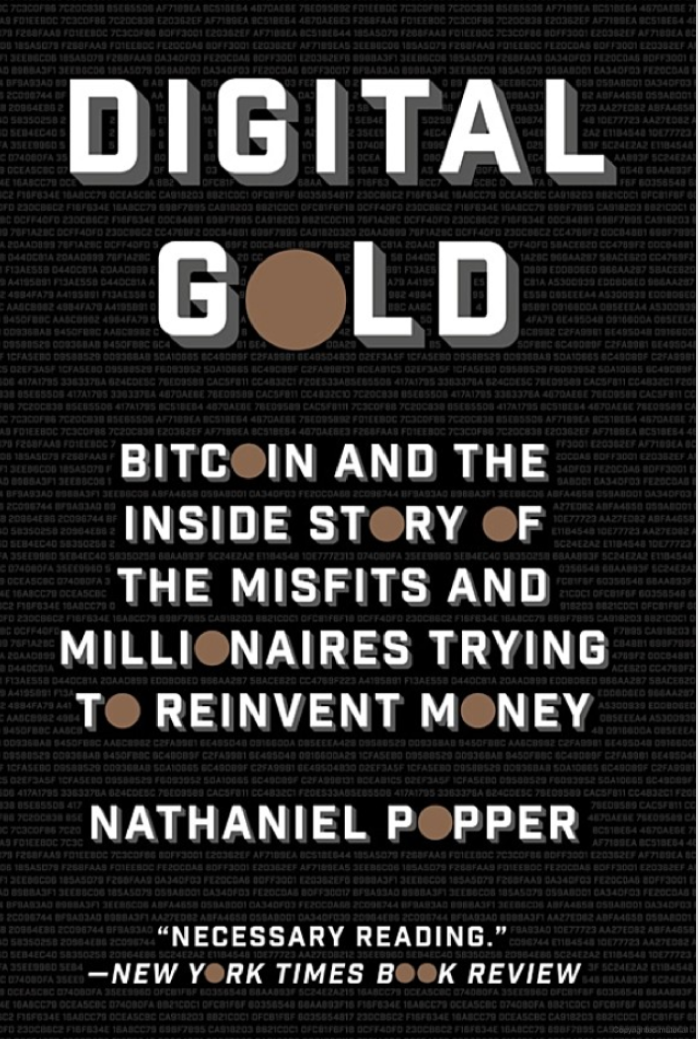
When I was searching for reading material, the book Digital Gold kept coming to the top of various lists about the best books on blockchain and crypto. It didn’t disappoint. While much of the writing about blockchain is jargon-filled, technical-speak that leaves you feeling stupid, Nathaniel Popper is a New York Times journalist who approaches the subject as a reporter investigating this through a sociological lens. Digital Gold is highly accessible because Popper tells the human story of blockchain following the lives of a very colorful cast of characters.
One of the challenges in the blockchain space is that it is hard to find intermediate-level reading material that takes you beyond a basic Blockchain 101 understanding of the subject. While Digital Gold is not heavy on the technicals, Popper does slowly walk the reader through the early days of Bitcoin, explaining the concepts of mining and proof of work as methods for producing a digital currency. The real value of the book though is that Popper uses the stories of various individuals to flesh out the potential use cases of blockchain. These use cases range from drug exchanges in the days of Silk Road to nobler uses as Wence Cesares attempts to build a crypto company focused on financial inclusion in emerging markets. The book was published in 2016, so the narrative wraps up in 2015; however, Popper provides an overview of the early players and projects that have gone on to define the current blockchain world in 2020.
For others like me who are looking to get a better handle on blockchain and understand its potential, I highly recommend Digital Gold. Popper is currently a crypto-skeptic and caused a little stir in early 2020 when he wrote an article saying Bitcoin is still mostly used by criminals to buy drugs. A whole cohort of folks took issue with and responded to this claim, but needless to say, Popper is not a cool-aid drinker. Digital Gold is written from the perspective of a journalist with a healthy degree of skepticism of blockchain who often marvels at how a bunch of seeming misfits end up handling so much money.
In closing out, I want to offer a quick summary of a few of the main storylines that stuck with me. There are many more characters in the book, so I found it helpful to keep a list of all the new names in the front cover as I went along.
Satoshi Nakamoto
Much has been written about Satoshi Nakamoto, the pseudonym for the person or group of people who created Bitcoin back in 2009. Popper does an amazing job of diving into the primary documents by stitching together the early months of Bitcoin’s existence via the messages Satoshi exchanged with a handful of early users.
Silk Road
The rise and fall of Silk Road is weaved throughout the book as Popper explores and the oft-asked question of what can Bitcoin be used for. Although the first Bitcoin exchanged for a good or service was a guy buying a pizza in Florida (now commemorated on May 22nd as “Pizza Day”), an early use case was buying drugs online. This is still a use case that Popper has continued to write about more recently. Silk Road is one of the earliest and most famous examples of this where an individual named Ross William Ulbricht (aka “Dread Pirate Roberts”) hacked together a website and began enabling drug deals to be settled in Bitcoin. There is a whole fascinating narrative around how Ulbricht is eventually taken down, and Popper quotes extensively from Ulbricht’s diary, which is seized off his computer.
Wences Casares
Popper clearly takes a liking to Wences Casares and presents him as one of the noblest figures in the book. Casares is from Argentina and much of his narrative is shaped around the continued currency crises in that country. Casares sees a clear use-case for a non-sovereign currency like Bitcoin as Argentinian citizen’s savings are repeatedly wiped out in the midst of hyperinflation. While finding dollars can be hard to come by in emerging markets, Casares recognizes that Bitcoin offers a store of value that could be the centerpiece of financial services for these markets. He goes on to launch a company called Xapo that is still pursuing this initiative today along with a cohort of new startups.
The Winklevoss Twins
Soon to be the subject of another movie, the Winklevoss twins also make an appearance in Digital Gold. The story is fairly well-known now, but the twins took a healthy portion of their money from their Facebook settlement and have plowed it into various crypto ventures, most famously the crypto exchange Gemini. The Winklevoss twins offer an intriguing angle because they demonstrate how Bitcoin starts to go mainstream and get the attention of traditional financiers in 2012 and 2013.
Mt. Gox
Mt. Gox is another infamous case study in the crypto world. Mt. Gox was the first exchange that famously went bust in 2014 when it lost $450mm worth of Bitcoin. Popper follows the Mt. Gox roller coaster tracking how its early growth was critical to giving individuals an on-ramp from fiat currency to Bitcoin. This concept of an “on-ramp” has seen tremendous developments in recent years but continues to be a challenge for the space.
Coinbase
Coinbase does not feature that prominently in the book, but Popper does talk about how the $5mm venture investment in Coinbase in 2013 was a turning point for crypto. The industry was in the midst of the Mt. Gox debacle, and Coinbase came on the scene as the financier’s entry point into crypto. Coinbase arrived with the mantra of trying to play by the rules of the traditional financial system, and the venture capital community rewarded this. Coinbase has continued on with this ethos and is now one of the most valuable startups in the fintech ecosystem.
Governance
A quiet hero that emerges from the book is Gavin Andresen. Andresen is the third key developer that becomes involved with Bitcoin in the early days, and Popper portrays Andresen as playing the role of the responsible dad with a bunch of misfit kids. Andresen has gone on to be a minor celebrity and remains a name talked about in the Bitcoin world. As of late, he has gotten involved in the controversy of the Craig Wright trial (a guy from Australia who claims to be Satoshi but most likely is not).

 Jeff Cangialosi
Leave a comment